Go Chieftains Football
A Designer’s First Look: Bold, Playful, and Built for Movement
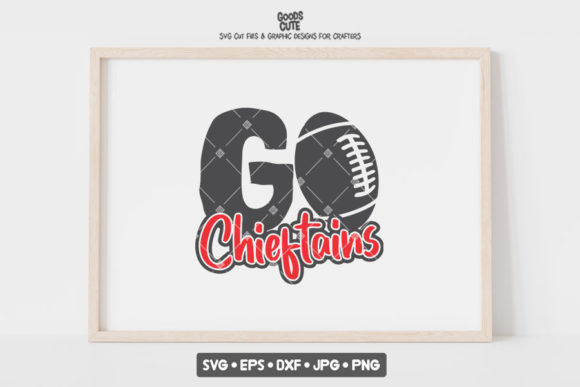
When Go Chieftains Football landed in my inbox, I paused—then opened it on three different screens. Why? Because football-themed embroidery designs so often fall into one of two traps: oversimplified mascots that look flat on fabric, or overwrought illustrations crammed with tiny details that bleed or pucker under stitch. Go Chieftains Football avoids both. It reads instantly as spirited and cohesive—a strong graphic presence that carries energy without shouting. The layout feels balanced for center-chest placement on a sweatshirt or front-panel positioning on a tote bag. There’s no fussy outline work or fragile negative space; instead, clean shapes, confident line weight, and intentional spacing suggest this was built with real-world stitching in mind—not just vector perfection.
Real Project Test: Embroidering a Limited-Edition Tote for Local Game Day
Last week, I prepped a small batch of cotton canvas totes for a neighborhood tailgate pop-up. I chose Go Chieftains Football for the front panel—not as a logo replacement, but as a bold, celebratory centerpiece. I ran it through my digitizing software to verify stitch path logic (no overlapping fills, no abrupt direction shifts), then stitched a test on scrap fabric using medium-weight cutaway stabilizer. The result? Crisp edges, even satin-stitched lettering, and zero thread nesting in the curved “C” of “Chieftains.” On the finished tote, it held up beautifully against the natural texture of the canvas—no sinking, no distortion. Customers responded immediately: “That’s *us*,” one said, pointing not at the team name, but at the design’s swagger. That kind of intuitive recognition is rare—and valuable—for any craft business or Etsy seller building community-driven products.
Where It Shines (and Where to Pause)
Go Chieftains Football performs exceptionally well across common handmade categories:
- Custom apparel: Works cleanly on midweight cotton sweatshirts, structured caps (with proper cap framing), and even lightweight fleece—provided you use appropriate topping on napped fabrics.
- Personalized gifts: Its clear visual hierarchy makes it ideal for baby embroidery on onesies (scale down to 3.5" wide) or holiday embroidery on kitchen towels—especially when paired with simple running-stitch borders or monogram accents.
- Small shop merchandise: As a digital embroidery file, it scales reliably for patches, pillow covers, and aprons. I tested it at 4.25" on twill patch material—it filled the hoop evenly, with consistent fill stitch density and no visible gaps between elements.
- Commercial embroidery: The clean geometry and minimal interior detail mean fewer re-hooping stops and faster run times. No dense satin columns that risk thread breakage at high speed.
But here’s where practical judgment matters: Go Chieftains Football isn’t optimized for ultra-fine applications. Avoid it on stretchy knit baby bodysuits without heavy stabilizer backing—or on dark, loosely woven tea towels where fine lines may blur. The letterforms are legible at 3", but drop below 2.75" and the inner counter of the “O” starts to close visually in stitch. Also, while it works on sublimation paper as described, remember: embroidery and print workflows demand different prep. Don’t assume the same file will translate seamlessly from vinyl decal to machine embroidery without reviewing stitch order, jump stitches, and underlay.
Design Integrity Meets Customer Trust
As an embroidery designer who sells digital embroidery files and consults with small shops, I watch how customers interpret craftsmanship—not just through finish, but through intention. When someone sees Go Chieftains Football on a hand-embroidered apron at a craft fair, they don’t see “graphics”—they see confidence. They sense that the maker understood scale, fabric behavior, and audience. That perception elevates perceived value. It also builds trust: repeat buyers return because they know your embroidered patch won’t fray after three washes, your tote won’t distort after folding, your baby onesie won’t irritate sensitive skin. Go Chieftains Football supports that promise—if used thoughtfully.
Essential Designer Notes Before You Stitch
- Always test first: Run a full-size stitch-out on scrap fabric matching your final project’s weight and weave—even if it’s just a corner swatch.
- Check thread color contrast: This design relies on shape clarity, not shading. Dark thread on dark fabric can mute impact—try white or bright kelly green for visibility on navy or charcoal.
- Review stitch density: While optimized for vinyl cutting, confirm fill stitch % in your embroidery software. Overly dense areas may cause puckering on lightweight cotton.
- Confirm hoop size and placement: Measure your intended location before hooping—especially on curved surfaces like caps or tapered pillow covers.
- Inspect small details: Zoom in on corners and tight curves in your embroidery software. If the “t” crossbar looks thin or disconnected in preview, adjust underlay or reduce scale slightly.
- Mock it up in black and white: Print a grayscale version to assess value contrast—this reveals whether letterforms hold separation on textured or dark backgrounds.
- Use proper stabilizer: Medium cutaway for stable wovens; tear-away + topping for knits or nap-heavy fabrics.
- Licensing check: Since this is categorized under Graphics and Crafts, verify usage rights before selling finished embroidered items commercially—or reselling the digital embroidery file itself.
Final Thought: A Design That Serves the Maker First
Go Chieftains Football doesn’t try to be everything. It’s not a photorealistic crest, nor a minimalist monogram. It’s a focused, functional, joyful piece of design—built for motion, memory, and making. Whether you’re embroidering a single personalized gift or scaling production for a local shop’s game-day collection, it delivers clarity, consistency, and quiet professionalism. That’s what separates a good embroidery file from a reliable design asset. And in the hands of a thoughtful maker? It becomes more than thread on fabric—it becomes part of the story people choose to wear, carry, and share.